6 Conduct Rules

C1. Egregious or exceptional violations. Egregious behavior beyond what is listed in the rules or repeated violations of any rule or procedure during the event is prohibited.
In addition to rule violations explicitly listed in this manual and witnessed by a REFEREE, the Head REFEREE may assign a YELLOW or RED CARD for egregious ROBOT actions or team member behavior at any time during the event. This includes violations of the event rules found on the FIRST® Robotics Competition Event Experience web page
Please see YELLOW and RED CARDS for additional detail.
Violation: The Head REFEREE may assign a YELLOW or a RED CARD.
Note
The intent of this rule is to provide the Head REFEREES the flexibility necessary to keep the event running smoothly, as well as keep the safety of all the participants as the highest priority. There are certain behaviors that automatically result in a YELLOW or RED CARD because we believe this behavior puts our community at risk. Those behaviors include, but are not limited to the list below:
a. Inappropriate behavior as outlined in the blue box of C2.
b. Jumping over the FIELD border,
c. Sitting on the SHIELD GENERATOR,
d. PINNING in excess of fifteen (15) seconds
e. Foregoing the use of the LOADING BAY rack in a way that appears to be deliberate to a REFEREE (e.g. hiding POWER CELLS or violating H10 multiple times during an event).
The Head REFEREE may assign a YELLOW or RED CARD for a single instance of a rule violation such as the examples given in items a-e above, or for multiple instances of any single rule violation.
Teams should be aware that any rule in this manual could escalate to a YELLOW or RED CARD. The HEAD REFEREE has final authority on all rules and violations at an event
C2. Be a good person. All teams must be civil toward their team members, other team members, competition personnel, FIELD STAFF, and event attendees while at a FIRST Robotics Competition event.
Violation: Behavior will be discussed with team or individual. Violations of this rule are likely to escalate to YELLOW or RED CARDS rapidly (i.e. the threshold for egregious violations is relatively low.)
Note
Examples of inappropriate behavior include, but are not limited to, use of offensive language or other uncivil conduct.
Examples of particularly contemptible behavior that is likely to result in ARENA ejection include, but are not limited to, the following:
a. Assault, e.g. throwing something that hits another person (even if unintended)
b. Threat, e.g. saying something like “if you don’t reverse that call, I’ll make you regret it”
c. Harassment, e.g. badgering someone with no new information after a decision’s been made or a question’s been answered
d. Bullying, e.g. using body or verbal language to cause another person to feel inadequate
e. Insulting, e.g. telling someone they don’t deserve to be on a drive team
f. Swearing at another person (versus swearing under one’s breath or at one’s self)
g. Yelling at another person(s) in anger or frustration
C3. Asking other teams to throw a MATCH – not cool. A team may not encourage an ALLIANCE, of which it is not a member, to play beneath its ability.
NOTE: This rule is not intended to prevent an ALLIANCE from planning and/or executing its own strategy in a specific MATCH in which all the teams are members of the ALLIANCE.
Violation: Behavior will be discussed with team or individual. Violations of this rule are likely to escalate rapidly to YELLOW or RED CARDS and may lead to dismissal from the event (i.e. the threshold for egregious violations is relatively low.)
Note
Example 1: A MATCH is being played by Teams A, B, and C, in which Team C is encouraged by Team D to not hang on a GENERATOR SWITCH at the end of the MATCH, resulting in Teams A, B, and C not earning a Ranking Point. Team D’s motivation for this behavior is to prevent Team A from rising in the Tournament rankings and negatively affecting Team D’s ranking. Team D has violated C3.
Example 2: A MATCH is being played by Teams A, B, and C, in which Team A is assigned to participate as a SURROGATE. Team D encourages Team A to not participate in the MATCH so that Team D gains ranking position over Teams B and C. Team D has violated C3.
FIRST ®considers the action of a team influencing another team to throw a MATCH, to deliberately miss Ranking Points, etc. incompatible with FIRST values and not a strategy any team should employ.
C4. Letting someone coerce you in to throwing a MATCH – also not cool. A team, as the result of encouragement by a team not on their ALLIANCE, may not play beneath its ability.
NOTE: This rule is not intended to prevent an ALLIANCE from planning and/or executing its own strategy in a specific MATCH in which all the ALLIANCE members are participants.
Violation: Behavior will be discussed with team or individual. Violations of this rule are likely to escalate rapidly to YELLOW or RED CARDS and may lead to dismissal from the event (i.e. the threshold for egregious violations is relatively low.)
Note
Example 1: A MATCH is being played by Teams A, B, and C. Team D requests Team C to intentionally position its CONTROL PANEL such that the color isn’t correct, resulting in Teams A, B, and C not earning a Ranking Point. Team C accepts this request from Team D. Team D’s motivation for this behavior is to prevent Team A from rising in the Tournament rankings negatively affecting Team D’s ranking. Team C has violated C4.
Example 2: A MATCH is being played by Teams A, B, and C, in which Team A is assigned to participate as a SURROGATE. Team A accepts Team D’s request to not participate in the MATCH so that Team D gains ranking position over Teams B and C. Team A has violated C4.
FIRST considers the action of a team influencing another team to throw a MATCH, to deliberately miss Ranking Points, etc. incompatible with FIRST values and not a strategy any team should employ.
C5. Enter only one (1) ROBOT. Each registered FIRST Robotics Competition team may enter only one (1) ROBOT (or ‘Robot’, a ROBOT-like assembly equipped with most of its drive base, i.e. its MAJOR MECHANISM that enables it to move around a FIELD) into a 2020 FIRST Robotics Competition Event.
Note
“Entering” a ROBOT (or Robot) into a FIRST Robotics Competition means bringing it to or using it at the event such that it’s an aid to your team (e.g. for spare parts, judging material, or for practice).
While “most of its drive base” is a subjective assessment, for the purposes of C5, an assembly whose drive base is missing all wheels/treads, gearboxes, and belts/chains is not considered a “Robot.” If any of those components are incorporated, the assembly is now considered a “Robot.”
This rule does not prohibit teams from bringing in Robots from other FIRST programs for the purposes of awards presentations or pit displays.
Violation: Verbal warning. Egregious or repeated violations at any point during the event will be addressed by the Head REFEREE, the Lead ROBOT Inspector and/or Event Management.
C6. Show up to your MATCHES. Upon each team’s ROBOT passing initial, complete Inspection, the team must send at least one (1) member of its DRIVE TEAM to the ARENA and participate in each of the team’s assigned Qualification and Playoff MATCHES.
Violation: If ROBOT has passed an initial, complete Inspection, RED CARD.
Note
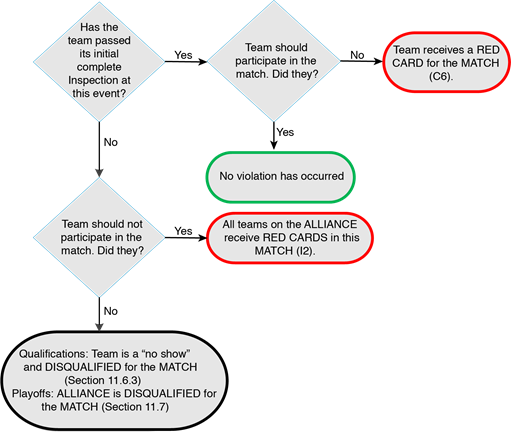
Figure 6‑1 MATCH participation flowchart
The team should inform the Lead Queuer if the team’s ROBOT is not able to participate.
C7. Be prompt/safe when coming to and going from the FIELD. DRIVE TEAMS may not cause significant or repeated delays during the event to the start of a MATCH, the FIELD reset after a MATCH, or continuation of MATCHES after a TIMEOUT.
Violation: If prior to the MATCH, the offending DRIVE TEAM’S ROBOT will be DISABLED. If after the MATCH, YELLOW CARD.
Note
DRIVE TEAMS are expected to stage their ROBOTS for a MATCH, and remove it from the FIELD afterwards, safely and swiftly. Examples of violations include, but are not limited to:
a. late arrival to the FIELD (including across different MATCHES and after a FIELD or ALLIANCE TIMEOUT)
b. failing to exit the FIELD once a MATCH is ready to begin (indicated by the green LEDs have turned off)
c. installing BUMPERS, charging pneumatic systems, or any other ROBOT maintenance once on the FIELD
d. use of alignment devices that are external to the ROBOT (e.g. a DRIVE TEAM could bring and use a measuring tape, as long as there is no delay to the MATCH by doing so)
e. failing to remove OPERATING CONSOLES from the PLAYER STATIONS in a timely manner
At the conclusion of a TIMEOUT, ROBOTS are expected to be staged on the FIELD prior to the timer displaying zero (0) and ready for the MATCH to start.
C8. Don’t expect to gain by doing others harm. Strategies clearly aimed at forcing the opponent ALLIANCE to violate a rule are not in the spirit of FIRST Robotics Competition and not allowed. Rule violations forced in this manner will not result in an assignment of a penalty to the targeted ALLIANCE.
Violation: FOUL. If repeated during the MATCH, TECH FOUL.
Note
C8 does not apply for strategies consistent with standard gameplay, for example, a Blue ALLIANCE ROBOT contacts a Red ALLIANCE ROBOT in the Blue ALLIANCE’S LOADING ZONE.
C8 requires an intentional act with limited or no opportunity for the TEAM being acted on to avoid the penalty, such as:
a. a Blue ALLIANCE ROBOT forcing a Red ALLIANCE ROBOT to have greater than momentary CONTROL of five (5) POWER CELLS.
b. a Blue ALLIANCE ROBOT pushing a Red ALLIANCE ROBOT from fully outside the Blue ALLIANCE TRENCH RUN into the Blue ALLIANCE CONTROL PANEL.
C9. One student, one Head REFEREE. A team may only send one (1) pre-college student from its DRIVE TEAM to address the Head REFEREE.
Violation: The Head REFEREE will not address additional, non-compliant team members or peripheral conversations.
Note
Please see REFEREE Interaction for more information about process and expectations.
C10. Plug in to/be in your PLAYER STATION. The OPERATOR CONSOLE must be used in the PLAYER STATION to which the team is assigned, as indicated on the team sign.
Violation: The MATCH will not start until the situation is corrected. If during a MATCH, DISABLED.
Note
One intent of C10 is to prevent unsafe situations where long tethers to OPERATOR CONSOLE devices increase tripping hazards as the operator moves about the ALLIANCE STATION. In the interest of avoiding nuisance penalties associated with an operator stepping outside of a prescribed area, we prefer to offer a general guideline as to what it means to use the OPERATOR CONSOLE in the ALLIANCE STATION. Provided the operator is within close proximity of their PLAYER STATION, there will be no repercussions. However, an operator located more than approximately ½ PLAYER STATION width away from their own PLAYER STATION, is likely violating C10.
